
By Salamatu Yusuf Alabi
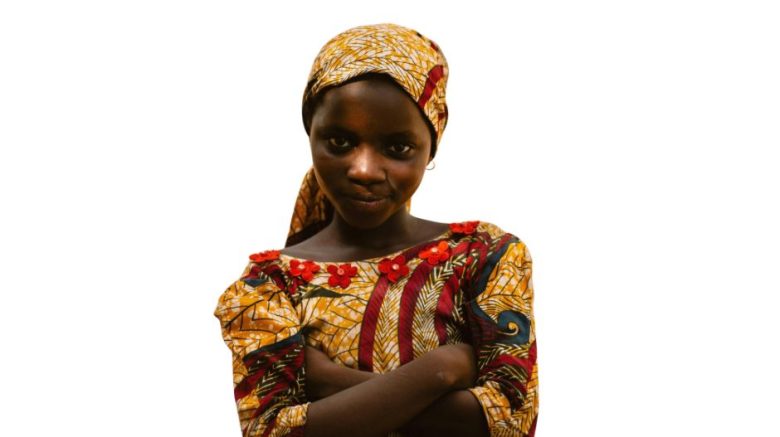
The statistics are heart wrenching. Globally, a girl marries every 30 seconds in countries ranked as fragile and child marriage hotspots. This painfully translates to about 32 million adolescent girls forced to trade their liberty, innocence and education to assume duties of what they know next to nothing about, and thereby losing their childhood in the process. Often times when the issue of child marriage is being discussed, faults are commonly apportioned to the ineffectiveness of national legislation and international mandates. But the reality is that the fight waged against child marriage is less likely to be won in distant capitals, rather it is won or lost in our local communities and homes. This is because the most sustainable solutions are not imposed, they are ignited.
National laws are the framework of protection but they often lack the brawn. An external decree, however well meant, can fall apart when it attempts to defy an overpowering economic desperation. When a family sees a daughter as an economic weight, one less mouth to cater for or a means to financial stability, a law without local enforcement or practical alternatives becomes an insignificant piece of paper. This is exactly what necessitates the need to entrench the power to change hearts in the hands of the community, starting with its trusted leaders.
The cornerstone of this approach is to enable the gatekeepers, the traditional and religious figures who are bearers of the moral blueprint of the community. This is because their mandate holds more stance than a parliamentary act. The revolutionary power of this principle is accurately demonstrated by Senior Chief Kachindamoto of Malawi. She carefully viewed and studied the widespread practice of child marriage in her country and leveraged her traditional authority in partnership with the council of elders to craft and enforce local bylaws that forbid child marriage and revoked existing ones. Till this day, she has dissolved over 2,500 child marriages, sending the girls many of whom are already mothers, back to school. The tremendous impact is not just in the digits, but in the message: the protector of tradition has become the advocate for change. She has shown that true leadership means enabling a healthier pattern, thereby providing indigenous solutions that are trusted and practicable.
Equally crucial is giving girls themselves the avenue to question tradition from the inside. This is the purview of youth networks, the uncaged voices who transform a social norm by opposing it within their peer group. Community organizations are now creating Girls’ Safe spaces; safe havens where young women are equipped with the knowledge of health, financial literacy and vitally, the power of collective refusal. These are not merely societies, but training grounds for activists like Memory Banda of Malawi, who began her advocacy after her 11-year-old sister was forcefully married off.
When the defiance comes from within the peer group, the harmful norms begin to look more like backwardness, instead of tradition, which leads to making new choices on education, independence, and economic right, which is the prevailing purposeful ideal. Irrevocably, we cannot dismiss the stifling economic reality that bolsters this practice. For many families, marriage is an act of economic triage. To provide a sustainable alternative, the community needs to address the root cause: poverty.
The strongest contrary viewpoint to early marriage is education and sustenance. The statistics are undeniable: If all girls completed secondary school, global child marriage rates could drop by a staggering two-thirds. Education is not meant to be a privilege; it is the utmost economic vindication. Community-led financial solutions work where simple laws fail. Conditional cash transfers provide incentives for families to keep girls in school. Microfinance programs empower mothers with capital to set up and manage small businesses, turning a daughter from a financial responsibility into a beloved investment in the family’s future. By giving a mother a livelihood and a daughter an education, the economic incentive for early marriage is alleviated, replaced by a pathway to collective prosperity.
In conclusion, the path to ending child marriage is not a single, grand highway; it is a mosaic knitted from countless local revolutions. It is the integration of the Gatekeepers’ Authority, the Girls’ Agency, and the Economic Safety Net. This model provides hope, not charity. It is built on trust, not mandates. The ultimate, quiet revolution is unfolding now, village by village. It is a profound, unstoppable force, proving that when a community believes in the potential of every single girl, a whole world is reborn.